InView Magazine: Issue 8 out now!



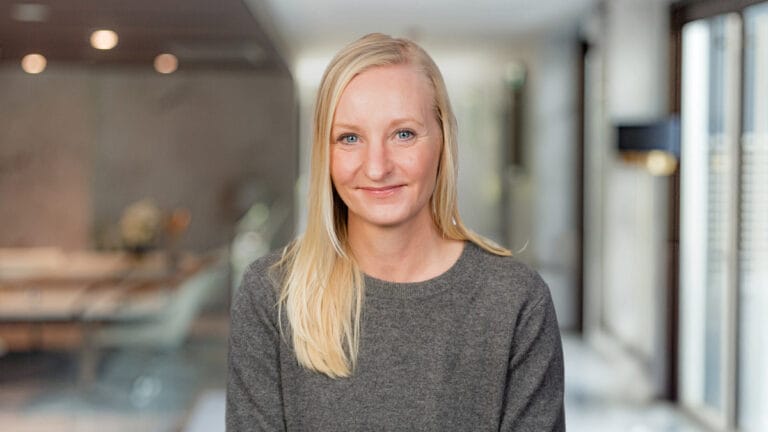
An “accidental lawyer” is how Lisa Mather, Head of Legal, Risk & Compliance at Australian pet insurance tech company, Fetch, describes herself. “I never had a burning desire to be a lawyer,” she reflects, and rather thought she would end up in the sciences.
In school, Mather was drawn to math and science, yet she wasn’t entirely sure what path she wanted to take after graduation. Cue a year of “naval gazing” and travel, during which she decided her future lay in studying something that nurtured both her left and right brain. So, in 1988, she returned home to Australia and enrolled in a conjoint bachelor’s degree in science and law, majoring in Biochemistry, Organic Chemistry and Law.
Finding herself drawn to the “rich intellectual endeavors of the law,” she followed the path that led her to where she is today, a GC. Mather started out as an Associate at Herbert Smith Freehills Kramer, rotating through different departments. “I loved the pace of it,” she reflects. “I loved doing something different on a regular basis; it gave me a lot of stimulation and a lot of education.”
Mather describes herself as “nomadic by nature” and after two years, the metropolis of Hong Kong came calling. She took a position at Clifford Chance, specializing in M&A and Corporate Finance, a decision that would propel her career trajectory into the fast lane.
It’s commonplace for many Australians and Kiwis to take a rite-of-passage work opportunity in the UK or US, so Mather’s decision to base herself in Asia was going against the grain, especially in the late 1990s. She discovered a serious demand for top-tier legal services, but a smaller cohort of attorneys who couldn’t meet that demand, which was a win for her. “I was given increasing levels of responsibility that I don’t think would’ve happened that early in my career if I’d stayed in Sydney or moved to London,” she says.
When the time came to start a family in the 2000s, Mather moved back to Sydney and worked part-time to accommodate the demands of motherhood. She regarded spending more time at home as an opportunity to further her education and enrolled in an MBA. “Initially, I wanted to do something meaningful and interesting, and I thought I’ll do a few subjects and if it’s not going well, I’ll at least get a diploma. But I loved it and did the master’s.”
Parental leave is a point of contention for women in male-dominated fields, such as law. As research from the American Psychological Association shows, women are seen as highly communal in the workforce, with traits of warmth and compassion. Whilst men are perceived as highly agentic, ambitious and dedicated to their career. To advance in male-dominated professions, women must display agentic qualities. “However, taking parental leave – a strongly communal act – can undermine perceptions of women’s agency, with longer leaves exacerbating doubts about their commitment and ambition,” writes The Conversation. And, ironically, research shows that taking parental leave has been linked to creating positive impressions of men.
Mather’s decision to study for an MBA allowed her to redefine this narrative. She believes employers can often view leave breaks “as you slowing down, and the business will have to help you come back”. Her approach was to turn that “slowing down” into a ski-jump. “Make it into a launch,” she quips.
Completing the MBA placed Mather favorably in her employer’s eyes, “I was asked by the firm to do my partnership application and continue on that journey, but I didn’t have the same heart for it,” she says. Studying business had sown a seed. “I was more interested in understanding more holistically the machinations of business.”
That signaled her move into the in-house world, when she initially took a role as Legal Director, South Pacific for Colgate-Palmolive in 2008. When an opportunity to work in the Prague office presented itself, Mather’s wanderlust was reignited, kicking off a globe-trotting career with the company, and over the next decade she also worked with them in New York and Hong Kong.
Mather’s global perspective and ability to integrate into different working cultures has given her an invaluable toolkit for leading high-performing legal teams. She’s been particularly drawn to roles that challenge her – perhaps harking back to her desire for continuous learning. “I recognize that I have a higher tolerance for change and transformation,” she notes. “I like that momentum.”
In 2017, PayPal approached Mather, offering her the role of Chief International Counsel at their International headquarters in Singapore. It was still early days for the company, which she describes as “a dynamic, high-pressure and exciting time for the company learning to stand on its own two feet”. She relished the opportunity to work in a fast-paced tech company and the challenges of operating within multiple markets.
“I have this view that every company is a tech company or should consider itself to be a tech company in this day and age,” says Mather. This philosophy served her well when she took on the role of General Counsel at manufacturing giant Mars Wrigley. “When you look at more traditional businesses or more mature industries, they have quite interesting opportunities as well as challenges in digitizing.” She guided the company through a period of digital transformation and growth from a legal point of view.
Mather says Mars was “going through a real reinvention phase”. From a public commitment to becoming sustainable within a generation, to goals to double its business in size. Legal’s mission was to support the organization’s sustainability goals and strategic objectives.
During Mather’s tenure at Mars, ChatGPT launched. “In hindsight, that was the dawn of the tech disruption we’ve known these past couple of years,” she reflects. Like many businesspeople, Mather wishes she had a crystal ball as “we’re all grappling with the fact we don’t really know what the future looks like in the legal industry”.
One thing she is sure of, however, is change, and lots of it. Mather notes there is an abundance of legal knowledge now readily available which will change how legal professionals’ work.
It’s well-known that lawyers are often type-A people who thrive within structure, strategy and who adhere to tradition. AI upends the ground upon which type-A people walk. AI is developing at such a rapid pace that it’s impossible to predict what will come next, and for the legal profession that is scary.
Despite the unknown, Mather sees the immense value AI presents to the law. “I’d love to think we’d end up with better, faster, and cheaper legal services, and more access to justice,” she says.
In the case of the in-house lawyer, there is no doubt that legal tech is creating more efficient, effective legal teams, which Mather is embracing, but with some words of caution. “I see a lot of opportunity but also a lot of friction and ambiguity as we move through early stages of disruption.”
Her solution is to implement guardrails and prioritize education of the constantly evolving technology.
Mather’s career is a testament to the benefits of taking risks in order to reap rewards. From investing, seeking challenging work in foreign countries and being bold enough to break the status quo, to using her parental leave as an opportunity to invest in her education and business acumen. There is much that aspiring legal leaders can take from Mather’s playbook.