InView Magazine: Issue 8 out now!

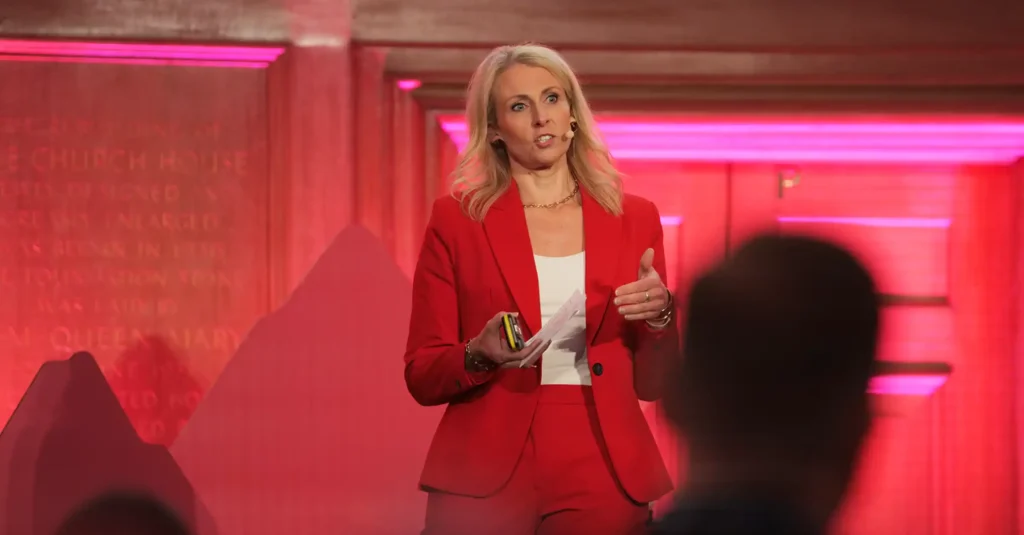

Labels don’t sit well with Sarah, especially her own. “I think ADHD (attention deficit hyperactivity disorder) is an inaccurate and unhelpful label,” she says. “I do not have a deficit of attention. I have an abundance of attention to the point where it’s problematic. And I don’t have a disorder; I just have a brain that is wired in a particular way. And I wouldn’t change it, even if I could.”
ADHD is among a range of conditions that fall under the neurodiversity umbrella that includes autism, dyslexia, OCD, Tourette’s, dyspraxia. Her own diagnosis came at 40, after both her children received theirs (her son was diagnosed at 11, her daughter aged 12). It was the belated key to understanding decades of self-questioning and a career that zigzagged across all areas of the legal sector in ways she once dismissed as “patchwork”: criminal bar, in-house roles across industries, a stint in private practice, General Counsel positions.
At the time it felt random, but in hindsight she sees it as training for exactly where she is now, in a role which leverages her strategic, creative and problem-solving brain to grow a startup ALSP in a difficult market.
“The career that I’ve had, plus my ADHD diagnosis, and now really understanding my own brain, has geared me up perfectly to approach my current role as CRO with real confidence. For me, variety is vital, and it means I’ve been able to make the most of my ability to move chameleon-like between very different roles. ”
Sarah describes her mind as “spicy” and proudly embraces what a colleague once called her “corkscrew brain”. The phrase, borrowed from Winston Churchill’s reference to unconventional thinkers who helped win high-risk missions during WWII, is one she wears as a badge of honor. Her corkscrew brain thrives in high-stakes situations. As a General Counsel, she found herself managing extremely tricky business crises, and on such occasions her wiring worked for her, not against her. “My ADHD brain is very much wired up for urgency. My performance goes right up, and I become laser focused.”
But in times of business as usual (BAU), her energy can plummet. “Brains like mine are not built for the calm. I am very bad when I’m bored. In fact, when it’s business as usual… that’s when I’ve burnt out. I feel like I’m wading through treacle, and my productivity goes through the floor.”
Years ago, and prior to her ADHD diagnosis, Sarah worked with an executive coach who set her a brave challenge: go to 10 of her peers and ask them for three words that described her impact at work. One of the people she approached was her company’s CEO. The first two words he chose flattered her – and those words are long forgotten. But the third, “disordered”, has stayed with her. She admits it landed like a gut punch, winding and wounding her.
“I can literally remember where I was sitting when that feedback landed. It was brutal. When we dug into it, he said ‘when the s*** hits the fan, there is nobody I would rather having sat next to me. But when it’s BAU and I just need calm assurance that things are covered, I can feel like I’m playing whack-a-mole with the day-to-day stuff on your desk.’”
According to Sarah, routine and BAU are her kryptonite, they don’t deliver the dopamine she needs. And the contrast that defines her – brilliance in high-stakes matters, struggle in routine – has become the cornerstone of her professional self-understanding. Rather than force herself into the impossible mold of being the “perfect, well-rounded” employee, Sarah chooses to lean into her strengths. Strategy, creativity, energy and problem-solving are where she shines. Detail-heavy tasks? Not so much.
“For a long time, I thought I had to pretend I could do these things,” she admits. “I thought I had to work 20 times as hard as someone else so no one could see I couldn’t
do them. Now I say, don’t get me to do that thing, I’m much better over here. What works for me is having a problem to solve, something that sits in the too-hard-basket for others, or an opportunity to rethink, innovate or build.”
It’s not just about individual survival – it’s a philosophy for leadership. Sarah believes we shouldn’t expect people to be complete packages. Instead, we should build teams like orchestras: each person contributing their instrument, together creating something greater than the sum of its parts. “We don’t have to expect individuals to all be perfectly well-rounded. What we need is well-rounded teams.”
The data makes her case undeniable. Around 15–20 percent of the workforce is neurodivergent, yet only 10 percent of employers consider neurodiversity in their people
management practices. Deloitte estimates that productivity could increase by 30 percent in teams where neurodivergent employees are supported. Yet the stigma persists – 76 percent of neurodivergent employees hide their condition at work. The numbers are worse for autism, with only 22 percent of autistic adults in the UK in employment.
To Sarah, this isn’t just a failure of empathy but a catastrophic waste of talent. “I want the world of work to be geared up to help everybody succeed – I want that for my kids. And I think it’s a massive missed opportunity if we don’t.”
Her suggestions are as refreshing as they are practical. Give people psychological safety to ask for what they need. Stop insisting on cookie-cutter performance reviews
that highlight deficiencies instead of amplifying strengths. Pair people with complementary skills – a strategist with a detail-finisher, for example – so the sum of the partnership covers more ground than either could alone. Sometimes accommodations are as simple as a standing desk or a fidget toy. “Fix the system, not the people,” she urges.
Sarah also says the culture of the legal profession needs to change. With its rigid image of how lawyers should look, act and perform, the sector risks shutting out precisely the kinds of divergent thinkers who can innovate under pressure and see around corners. “In legal, we’re more guilty of it than most professions. There’s this kind of perfect image of how you have to show up. But actually, if we leaned into the strengths people bring, we could get a lot more out of them.”
Sarah has long stopped apologizing for the way her brain works. She is thriving not because she hides it, but because she embraces it. “I haven’t succeeded in spite of being ADHD, I’ve succeeded because of it. People rely on me to bring some, what I term ‘crazy’, which is my ability to come from at things from a different angle with creativity, strategic nous and energy.”
Playing to her strengths – innovating, building, and reimagining ways of working in the lean, scale-up environment she now inhabits – has made her appreciate how good a fit she and her corkscrew brain are for The Legal Director. “I’ve only realized it because I’ve had the privilege of moving into the CRO role where I can play to my strengths,” she says.
The way Sarah tells it, understanding neurodivergence isn’t about lowering the bar – it’s about raising it by acknowledging the different kinds of talent already in the room. The modern workforce doesn’t need more people who can do everything. It needs teams that are more like orchestras, a place where spicy, corkscrew minds are accepted and encouraged to play their part loud and clear.
This article was created from Sarah Clark’s address at the 2025 InView Connect conference held in London