InView Magazine: Issue 8 out now!

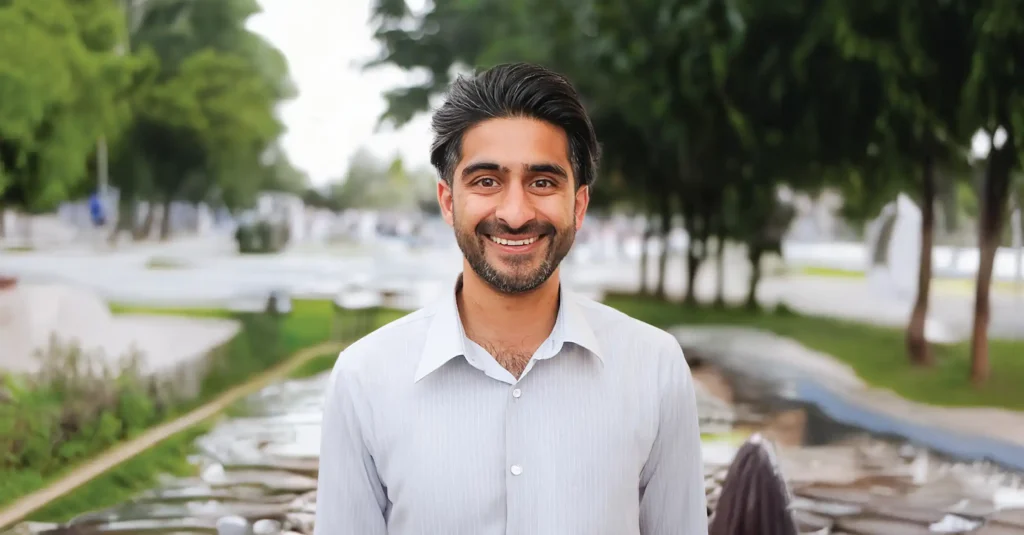

When the pandemic struck and Hamraj’s life as he knew, and had planned it, was upended, he made the decision to leave Manchester, where he’d been working, and return to London where he intended to study for a master’s degree. Once there, and wanting to stay connected to the legal world, he networked via virtual events. But rather than bolstering his desire to qualify as a barrister, the conversations he was having with his contemporaries saw him become increasingly intrigued by the world of startups.
“When talking to people about startups, I fell into this idea that you could apply your legal skills in a business,” he recalls. “That you could take ownership from an early stage, very similar to being a barrister, but do it in a team setting.”
It made him realize what was missing from his legal career: teamwork. Which gave him the impetus to try something new, in his case pivoting into a startup, which eventually led him to where he is now, at Zinc, an HR tech company automating background checks.
When Hamraj joined the company, it had barely a dozen employees. Today, it employs close to 120 and is doubling its revenue annually. Hamraj leads a lean but influential five-person legal team, with his remit stretching from data protection and regulatory compliance to corporate governance and commercial enablement.
For him, the point has never been to sit in judgment, but to help the business move faster while staying safe. “I did not sign up to tell them ‘no’ all the time – I signed up to enable them,” he says. That philosophy runs through his approach to risk. Rather than treating every query as a red flag, he applies a triage system: is this truly a risk, have we seen it before, and does it touch one of Zinc’s North Star business metrics? In most cases, the answer is no, allowing the company to act without unnecessary delay. When the answer is yes, the risk is “banked” by him personally. “It’s my risk to bank at the end of the day. I’ve got to be comfortable with it, and I’ve got to have a high tolerance for risk.”
That pragmatism extends to how he communicates. Lawyers are used to explaining their reasoning when they deny a request. Hamraj, on the other hand, makes a point of explaining when he says yes. “One of the things I started doing was giving detailed reasons for saying yes,” he says. And what began as courtesy became a cultural shift: colleagues started internalizing his reasoning and eventually brought him their own legally informed ideas. For him, it is about preserving agency. “Why do people not like being told no? Because it removes your agency.” By explaining his thinking, he hands back ownership rather than hoarding it.
The same principle drives his efforts to speak the language of the business. When finance grappled with late-paying customers, he tightened contract terms to penalize arrears. For sales, he introduced pre-approved templates that could be sent without legal bottlenecks. “You’re understanding their problem and using a mechanism at your disposal to fix it,” he says. It is, in his words, about “giving something back”.
Technology has been another lever. In an area where legal departments often lag, his team is implementing a GPT-based system to answer security and compliance questionnaires that once swallowed dozens of hours. The expected return – up to 70 hours a month – is equivalent to almost half an employee.
Zinc’s mantra is to scale with technology, not headcount, and Hamraj applies the same principle to his own team. He urges junior lawyers not to “play hero ball” by brute-forcing problems. “Don’t feel like that’s the only way to solve a problem. There are more efficient ways,” he advises.
Trust remains a more elusive challenge. “If you turn up as the GC, it’s not a given that people will trust you. So how do you engender trust?” he asks. For him, the answer lies in transparency, empowerment, and consistency, even when trust inevitably ebbs and flows. The resilience drilled into him during his legal training helps him hold course. “Businesses’ trust in lawyers can wax and wane depending on what they’re trying to do. That resilience you learn from becoming a lawyer needs to be deployed differently here.”
Along the way, Hamraj has worn many hats – sometimes HR, sometimes compliance, sometimes commercial. He credits first principles with helping him adapt. “As a legal professional I’ve been trained to assimilate large amounts of information quickly and identify the key issue,” he says. “Lawyers can be quite adaptable because you have the benefit of learning a few genuinely useful and transferable professional skills through the process of becoming a lawyer.”
Looking back, he admits one thing he would have done is lean on technology and data sooner. “If I was starting from scratch today, I would look to implement tech from day one,” he reflects. Early metrics, he adds, would have helped make stronger cases for investment. But what he would not change are the people he has hired, or the culture of partnership he has cultivated.
What Hamraj’s journey at Zinc reveals is less a set of hard rules than a way of thinking. Risk must be triaged, yes must be explained, and legal advice must be delivered in the language of business. Trust is earned not once but over and over again. And resilience, rather than being a defensive posture, is what allows a lawyer to keep enabling progress even when the ground shifts.
For Hamraj, leading legal in a fast-growing scale-up has never been about slowing the company down. It has always been about helping it run faster, safely, and with confidence.