InView Magazine: Issue 8 out now!

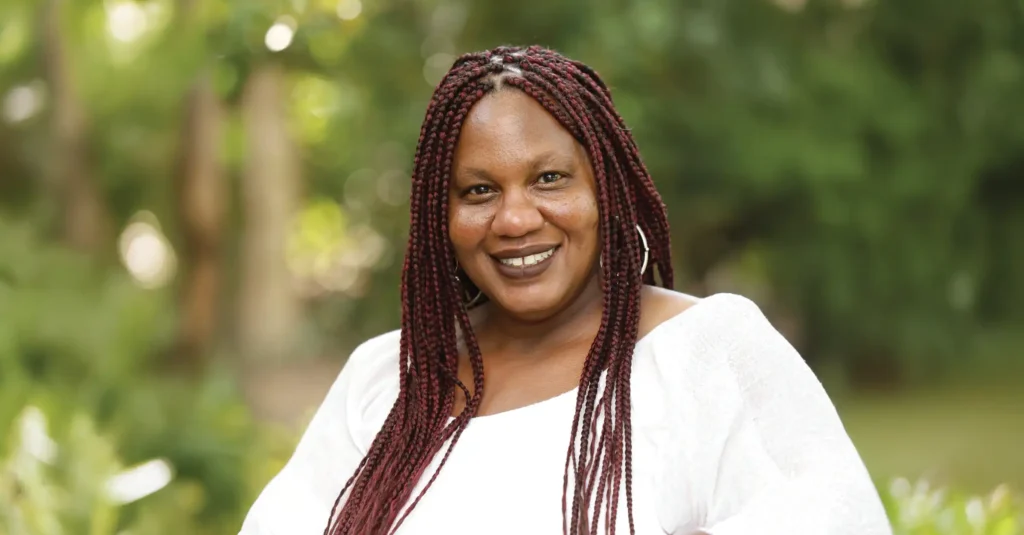

Passion for the not-for-profit (NFP) sector is so integral to Shahara, she regards it as part of her DNA. Helping others is a family trait; as a youngster, her grandparents encouraged her to volunteer in the church and the wider community, and her desire to be of service to those less fortunate has only strengthened over the years.
It was during her third year of law school, when she clerked for Advocacy Inc, an organization that helped navigate issues of access for handicapped and disabled individuals, that she realized it was possible to work in the not-for-profit sector – as in it could become a bona fide career opportunity and not just something she did in her spare time. Her goal was to become General Counsel for a NFP but, as often happens, life got in the way and took her in a different direction. She started her own law practice, The Wright Firm, which she ran for 25 years.
During that time, aside from work and raising a family, she stayed true to her values – still volunteered, still served on the boards of non-profit organizations and still remained heavily involved in her community. And despite working with and for NFPs as outside counsel as part of her law practice, her wish to move into the not-for-profit sector never diminished. And so, when opportunity came knocking almost 30 years after qualifying as an attorney, she was up for the challenge.
Her transition to CEFTX, spurred by a personal connection with its founder, Steve Brown II – their sons played baseball together – represented a serendipitous full-circle moment.
“Steve knew I did work with non-profits, and four years ago he contacted me to say he was thinking about starting a new organization. We had multiple conversations and when he was ready to move forward, he hired me to do the formation, get the tax exemption, and also consult on working with bringing in new board members, talking to them about process, procedures and compliance.”
In 2024, CEFTX secured a US$156 million federal grant under the US$7 billion US Environmental Protection Agency Solar for All initiative, which set the stage for the bank’s inaugural hiring. Shahara was offered the dual role of GC and COO, which she gladly accepted. “To be at the forefront of a new organization, and especially in an industry that is starting to grow and thrive in the clean energy space, was an opportunity that I couldn’t say no to,” she says.
Clean Energy Fund of Texas is a green bank. The term green bank stands for “mission-driven institutions that use innovative financing to accelerate the transition to clean energy and fight climate change”.
Focusing primarily on financing clean, renewable energy projects for low-income and underserved communities, CEFTX’s initiatives range from weatherization projects, like home insulation and storm windows, to providing solar energy solutions and improving energy efficiency in residential and business settings.
“Our focus is on reducing the energy burden for low income and disadvantaged communities,” Shahara explains. This means helping individuals lower their energy costs while simultaneously improving the resilience and sustainability of their homes and businesses.
Working toward greater equity in clean energy access resonates deeply with Shahara. The need is clear. As she points out, “We hit a market that traditionally would not have access to funds. How many of these people can afford a $30,000 system?”
According to Sharara, the market has been very receptive to the bank. “Solar, specifically, is very expensive. There can be high costs in terms of dealer fees, add-ons, those kinds of things. But because we are a non-profit, we don’t have all the extra fees that a for-profit would, so it reduces the costs.”
Transitioning from her own practice into an in-house role has required Shahara to adjust her approach in significant ways; while the work itself is not that different, being in-house has compelled her to adapt how she communicates. “As outside counsel, people generally went to her when something was already wrong, whereas now, as part of an organization, she gets the opportunity to anticipate and prevent potential challenges. “I get to see everything, and I often know something’s wrong before it happens. Which means I’ve got to convince people it’s wrong before they realize it.
“It’s a really different way of having to communicate, dealing with all the people within the organization and trying to work with them so they are prepared and understand all the things that are coming to them. Also, I was used to dealing with mostly one or two people at a time whereas these days I’m often dealing with many more.”
A major plus is that Shahara now gets to set the parameters of how things get done, such as what the processes and procedures are and who can sign off on contracts. “Operations and processes set the tone for how legal is going to work,” she says.
For Shahara, there’s a clear link between structure and success – getting compliance frameworks, contract management processes and organizational policies right from the start reduces friction and helps prevent future legal and operational challenges.
“Because I’m the first general counsel at CEFTX, I’m getting to set that process. I’m not having to come into someone else’s system, which means I get to control that a lot more. Which I prefer. It works well.”
Being in a position to set the parameters, to have control over situations, before and as they develop, means there are times when Shahara must apply the brakes when, business-wise, those around her want to put their foot on the accelerator. Such caution has earned her the nickname ‘Miss No’ around the office, although it must be stressed the term is more endearment than disparagement.
Shahara’s solution is that instead of issuing a blanket “no” she tempers what others might regard as negativity by offering constructive alternatives. “I might say ‘maybe not this, but how about that?’ Having options that can help us move forward in the right direction is the next thing that should be coming out of your mouth after ‘no.’”
If changing the way she communicates has been challenging since moving in-house, so too has been the constant call upon her time from within the organization. “My position as GC and COO is very eclectic and it pairs well. But it also means I’m having different conversations with different people all the time. One may be business orientated, and one may be legal and contract orientated, or about insurance. It makes my job very interesting – and unique.”
When Shahara worked as outside counsel, she could control the amount of people she was communicating with and what that looked like. “Now, I have to be a hundred percent on all the time, which is mentally and emotionally draining. I’m dealing with different personalities at different times, or sometimes all at once, which means it can be very difficult to properly understand and communicate.
“I spend a lot of my time trying to explain stuff and argue for things, which as outside counsel was not the case. I’m having to explain things much more than I did previously and interact with people in a way that I didn’t have to do as outside counsel.”
On the flip side of learning to deal with the challenges that come with constantly dealing with people, is the excitement that creates. Shahara’s previous dealings with the NFP sector were to do with issues such as homelessness, young people and education. The renewable clean energy space was an unknown, but it has become a significant force as the world grapples with the mounting evidence of climate change.
“Meeting the people in this space has been interesting and fun, and I’ve learned a lot. Meeting a completely new group that I would not have interacted with before and learning about an industry that I didn’t know anything about, has been thrilling.”
The challenges Shahara faces are not only personal. For the first time in its history, the NFP sector is having to deal with an unprecedented hardline attitude from federal government. Despite this, she remains optimistic, saying the demand for clean energy solutions continues to grow, especially in disadvantaged communities. “The community wants it. They want the access, they want the support, and they believe in it.”
She also sees the government’s stance as an opportunity for innovation born of necessity. “Non-profits have to think differently now. Before, you’d get your funding, carry out your programs, and repeat. Now you’ve got to be innovative and thoughtful.”
For those interested in working in the non-profit space, Shahara emphasizes the importance of gaining grassroots experience. “It’s relatively easy to do because there are so many non-profits that need assistance. If you say you’re a lawyer, they’ll scoop you up because they want and need that help. Volunteering on boards – whether it’s a parent-teacher organization or your local civic club – will help you understand the sector on a deeper level.”
It’s also critical, she says, to understand the spectrum of non-profit organizations, from small grassroots groups to large, heavily staffed foundations. And perhaps most importantly, Shahara advocates balancing legal expertise with practical risk-taking. “Non-profits are inherently risky. They’re dealing with some of the most vulnerable populations and addressing problems others won’t touch. You’ve got to learn to balance the mission with the business.
“We’re in an industry addressing needs that will never go away.”